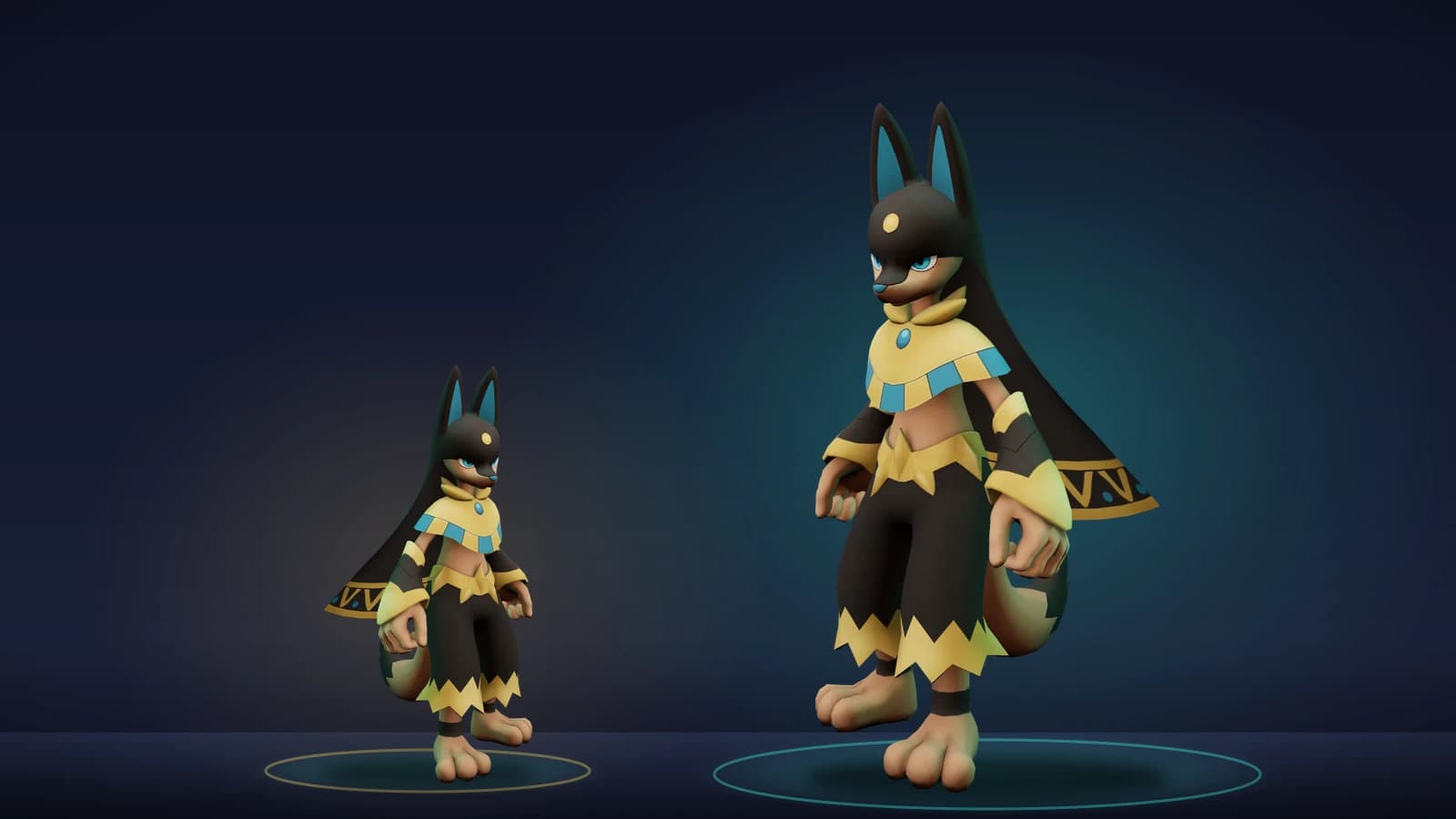
You bred the perfect fighter, ran the egg through the Alpha pickup party, and hatched a giant. Now the question that actually matters: should the copy you field be the Alpha, or the normal one you kept on the bench?
The answer is not "Alpha, obviously." The bonus is real, but so is the bigger body, and the two do not always point the same way. This is the full decision, from raw HP math to hitboxes, trust, and expeditions.
- Combat stat changed
- Max HP only
- HP bonus
- +20%, additive
- Attack and Defense
- Identical
- Expeditions
- Always favor Alpha
What Alpha actually changes in a fight#
Alpha status touches exactly one number on the combat sheet: maximum HP. Attack and Defense are identical between an Alpha and a normal copy at the same level with the same passives, IVs, souls, and trust.
Community testing converges on a 20% bonus added to the same pool as every other HP boost. Our own level 60 comparison shows an Alpha  Anubis at 6,263 HP against 5,274 on the normal copy, the displayed gap you get from a 20% additive bonus once the build's other boosts join the pool.
Alpha also improves things outside the combat sheet: mounts run faster, unwanted hatches sell for roughly double, and a few partner outputs scale up. Those benefits, and the three-Pal party that converts any breeding egg, are covered in the Alpha egg factory guide. Inside a fight, though, the entire stat story is HP.
Why 20% shows up as 7 to 13 in your Paldeck#
Players comparing two finished builds often see a much smaller gap than 20% and conclude the bonus was nerfed, or that something canceled it. Neither happened. The bonus is additive, so every other HP boost on the build shrinks its displayed share.
| Other HP bonuses on the build | Displayed Alpha gap |
|---|---|
| None | 20% |
| +50% | 13.3% |
| +90% | 10.5% |
| +180% | 7.1% |
The displayed gap is always 20 divided by 100 plus everything else. A normal Pal sitting at +90% shows 1.90x base HP, the Alpha shows 2.10x, and the difference between those two reads as 10.5% on the stat screen. The Alpha still has every point of its bonus. It just shares the label with a bigger crowd.
Trust does not cancel the bonus#
The most common version of the myth says a high-trust normal Pal catches up to an Alpha. It does not. Trust bonuses apply to both copies equally, and reaching trust rank 10 costs the same 200,000 trust points either way.
What trust actually does is feed the additive pool from the table above. As the shared total grows, the Alpha's extra 20 points become a smaller slice of the percentage, while the absolute HP lead stays exactly where it was. There is no catch-up mechanic anywhere in that math.
The hitbox tradeoff has four separate parts#
"Bigger hitbox is bad" flattens four distinct effects into one, and they do not all point the same direction:
- Damage exposure. A larger target catches projectiles and multi-hit areas that a normal body slips between. This is the real cost of Alpha on big species, and it compounds against attacks that tick many times.
- Pathing and positioning. Big bodies fight the arena itself. An Alpha
 Jormuntide spends noticeably more time repositioning than fighting and struggles to line up its exclusive attack at all.
 - Attacker geometry. Size can help offense.
 Frostallion Noct is the clean example: the larger wings on the Alpha help its charge attacks connect, so the same body that eats more projectiles also lands more hits.
 - Your screen. An Alpha between you and the fight blocks the camera, and the mounted view on huge species gets genuinely awkward. This is the complaint players raise more often than any combat number.
Judge three shapes separately before deciding: the defender's hitbox, the attacker's body, and the geometry of the specific skill. A multi-hit attack punishes a big defender, but a body-contact attack can reward a big attacker, on the same Pal.
One more lever sits with you, not the Pal. If you recall before the obvious lethal attack lands, the defensive half of the hitbox tax mostly disappears, and the Alpha's HP lead is what remains.
The right call, Pal by Pal#
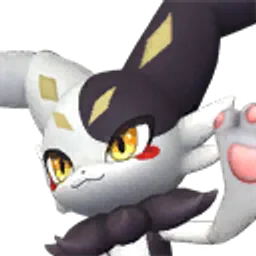 Paldeck #176
 FireDupinAlpha: the HP is nearly freePartner skillTrick-Loving FluffleWhile in party, when the player's Health falls below 50%, Dupin generates an explosion around the player (Fire / Power: 100 / Burn buildup: 777). Additionally, while the player's Health is below 50%, the player's Attack is increased by 30%. (Does not stack)HP100ATK110DEF100
 KindlingLv 7
 HandiworkLv 5Open Palpedia Paldeck #121
 Dragon
 WaterJormuntideNormal: fights the arena, not the enemyPartner skillStormbringer Sea DragonCan be ridden to travel on water. While in party, increases player's and Pals' damage to enemies afflicted with Soak by 50%. (Does not stack)HP130ATK120DEF100
 WateringLv 7Open Palpedia Paldeck #200B
 DarkFrostallion NoctAlpha: bigger wings land the chargePartner skillBlack SteedCan be ridden as a flying mount. While mounted, changes the player's attack type to Dark, increases Attack by 10%, and apply Blind buildup by 2.HP140ATK140DEF135
 GatheringLv 7Open Palpedia
 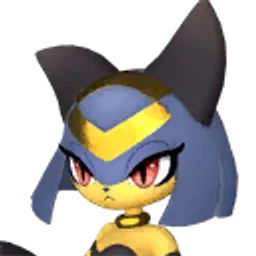 Paldeck #140
 GroundSekhmetSpecial case: partner skill scalesPartner skillDesert EmpressWhile at base, boosts Anubis's work speed by 20%. Increases efficiency by 30% if Sekhmet is also working at a Workbench, Workshop, or other related facilities. (Does not stack)HP110ATK115DEF100HandiworkLv 6
 MiningLv 3Open Palpedia
 | Pal | Verdict | Why |
|---|---|---|
| Dupin | Alpha | Still tiny after the size-up, so the 20% HP is close to free |
| Herbil | Normal | The small gliding body makes attacks whiff, and Alpha gives that up |
| Knocklem | Alpha | Already fights like a big body, so the size change barely moves its exposure |
| Moldron | Normal | The enlarged frame soaks extra ticks from multi-hit attacks |
| Jormuntide | Normal | Constant repositioning, pathing trouble, and a blocked camera |
| Ghangler Ignis | Normal | The small body stays easy to position through Volcanic Rain windows |
| Frostallion Noct | Alpha | Charge attacks connect more often, and the mount is faster |
| Aegidron | Normal | Extreme base size makes the camera and collision problems worse |
These verdicts reflect the community's accumulated field testing rather than a lab bench, and the pattern behind them is consistent: the smaller and more mobile the base body, the cheaper the Alpha upgrade.
Expeditions always favor Alpha#
Expedition strength reads four things: condensation rank, max HP, Defense, and Ranged Attack. The rank term multiplies the whole total, and HP is scaled down and added alongside the other two stats.
Hitboxes do not exist on an expedition. The Alpha's extra HP feeds straight into the strength score with zero downside, which makes expeditions the one place the answer never depends on the species. The gain is smaller than the full 20%, because HP is only one of the three stats being added, but it is pure profit.
If an Alpha loses the combat comparison for its species, it does not need to sit in a box. Park it on expedition duty and let the breeding calculator plan the normal copy for your party.
How to decide in 30 seconds#
- 1Name the job first
Expedition runner, mount, fielded fighter, or base worker are four different questions.
- 2Expedition or sale fodder
Always Alpha. Strength scales with HP and hitboxes are irrelevant.
- 3Mount
Alpha is faster. Test the camera on that species before committing to it as your daily driver.
- 4Fielded fighter
Match the body: small species keep the HP nearly free, huge species pay for it in exposure and pathing.
- 5Check your own habits
If you recall Pals before big attacks, the defensive downside shrinks and Alpha gains value.
- 6Partner-skill specialists
Check the specific skill, because cases like Sekhmet break the general rules.
The cheapest way to stop agonizing over the choice is to stop making it exclusive. The Alpha egg factory turns one perfected breeding line into both copies, so the Alpha can take the expedition slot while the right body for the fight takes the party slot.
When activated, Anubis changes the player's attack type to Ground and increases Attack by 30%. Occasionally evades attacks with a flash sidestep during battle.

 Bone×3–5
 Large Pal Soul×1
Can be ridden to travel on water. While in party, increases player's and Pals' damage to enemies afflicted with Soak by 50%. (Does not stack)
 Aquatic Pal Fluids×2–4
 Dragon Radiant Gem×10–20
Can be ridden as a flying mount. While mounted, changes the player's attack type to Dark, increases Attack by 10%, and apply Blind buildup by 2.
 Diamond×1Large Pal Soul×1–2
While at base, boosts Anubis's work speed by 20%. Increases efficiency by 30% if Sekhmet is also working at a Workbench, Workshop, or other related facilities. (Does not stack)
 Leather×2–3Large Pal Soul×1–2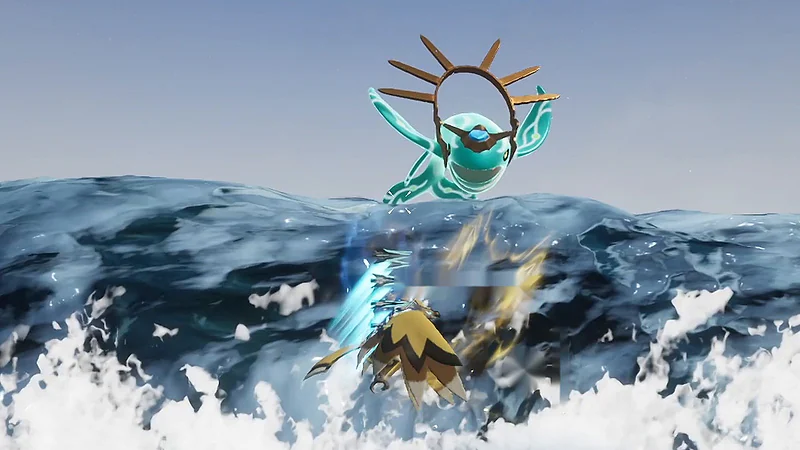
Comments
Loading discussion...