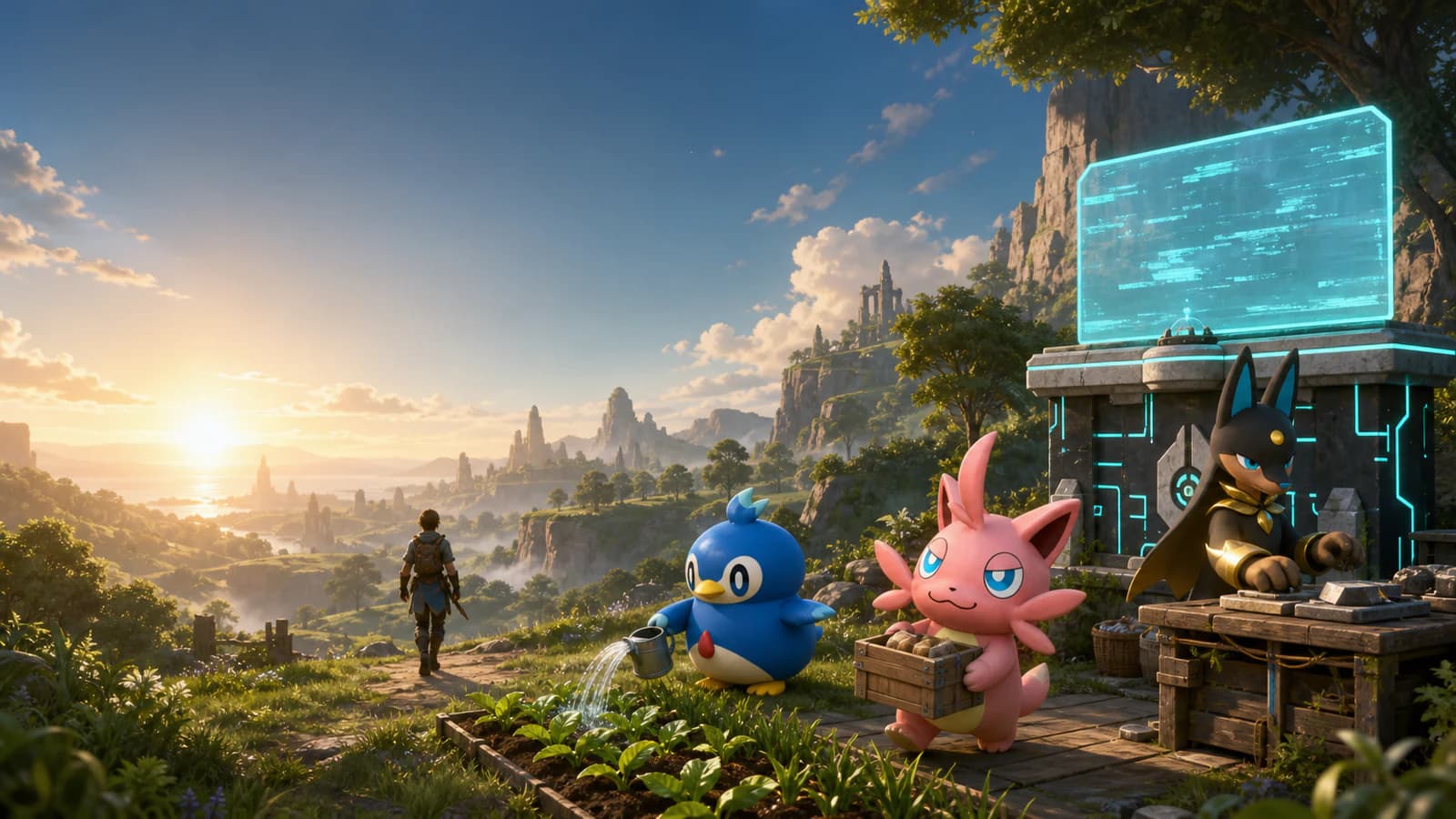
Palworld 1.0 did not simply produce a crowded launch night. Its second weekend climbed to 961,867 concurrent Steam players, more than 100,000 above the previous weekend, and the SteamDB chart still showed an 803,078 24-hour peak in the July 25 snapshot reviewed for this article.
That distinction matters. Palworld was not holding one million players every minute, and SteamDB's live counter moves constantly. The stronger story is that the rebound grew into its second weekend and then preserved an enormous daily audience. A 2,400-upvote community discussion points toward a more interesting explanation than comparisons with another creature-collecting series.
What the SteamDB chart actually says#
The numbers below describe different things. Treating them as interchangeable makes the rebound sound less credible, not more.
- Second-weekend Steam peak
- 961,867
- July 25 24-hour peak
- 803,078
- All-time Steam peak
- 2,101,867
- Palworld 1.0 release
- July 10, 2026
The 961,867 figure is a historical concurrent-player peak reported during 1.0's second weekend. PC Gamer's contemporaneous report recorded it as more than 100,000 above the prior weekend. The 803,078 figure is the highest concurrent count in SteamDB's rolling 24-hour window when we checked on July 25. The live total at any single moment can be lower.
The 2,101,867 all-time peak belongs to Palworld's original January 2024 breakout. Pocketpair also announced more than 40 million total players across its lifetime before the 1.0 launch. That total-player figure spans platforms and time, so it should not be compared directly with Steam concurrency.
What matters for the current story is the shape:
- A major 1.0 launch brought a large audience back.
- The following weekend rose instead of collapsing.
- A week later, the rolling daily peak remained above 800,000.
That is evidence of a durable rebound over the period measured. It is not yet proof of permanent retention, and it does not reveal how many individuals returned each day.
Adjustable friction widens the audience#
The most revealing Reddit replies came from people who said they usually bounce off survival and crafting games. Palworld gives them a way to keep the parts they enjoy without accepting every default inconvenience as a package deal.
Pocketpair's current server configuration documentation exposes controls across game balance, base capacity, workers, fast travel, hardcore behavior, randomization, performance, and multiplayer operation. That range supports very different definitions of a satisfying world.
| Player preference | Keep | Soften | Remove or minimize |
|---|---|---|---|
| Harsh survival | Resource pressure and danger | Slower deterioration | The most punishing loss rules |
| Relaxed co-op | Exploration and bosses | Repetitive gathering | Friction that stalls a short session |
| Builder-first | Production planning | Combat pressure | Restrictions that block experimentation |
| Collector-first | Capture and team building | Base chores | Survival systems that distract from Pals |
This does not mean every setting is equally good for every server. It means a friend group can negotiate the pain instead of abandoning the genre. A player can preserve hunger, danger, and progression while reducing the single chore that would otherwise end the session.
The official 1.0 changes also adjusted dedicated-server defaults to match single-player Normal more closely. That matters because the first experience of a community server should not feel accidentally harsher than the host intended.
Automation protects exploration#
Many survival games promise automation, but only after a long manual grind. Palworld's defining move is to make creatures useful at the base while the world still feels new.
A basic roster can mine, water, plant, harvest, transport, craft, kindle, cool, and generate power. The player still chooses what to build and where resources go, but Pals keep routine queues moving. Our best base Pals in 1.0 guide shows how quickly those jobs become a real production system.
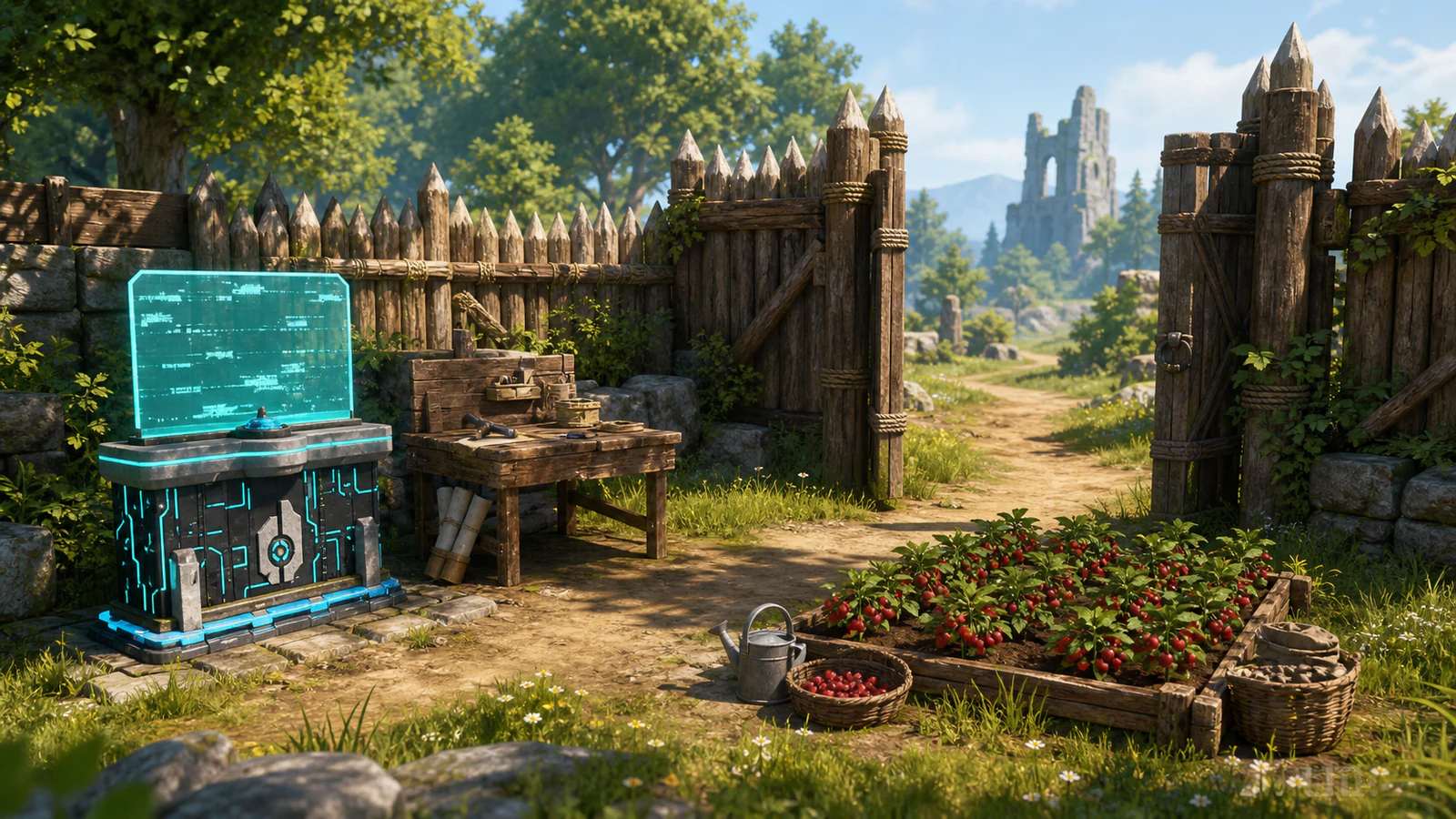
That changes the emotional rhythm. Logging in is less likely to begin with an hour of replacing basic supplies. The base can be productive while the player:
- Opens another fast-travel route.
- Searches a new island for Pals.
- Runs a dungeon or Ancient Ruin.
- Hunts a schematic.
- Joins friends for a boss or shared build.
Automation does not eliminate planning. It makes planning pay the player back in time. That distinction is especially important for people who like progression but dislike repetitive gathering.
Exploration gives that saved time somewhere to go#
Automation alone can become a spreadsheet with cute workers. Palworld 1.0 supports the loop by expanding what lies outside the gate.
Pocketpair's official 1.0 announcement introduced new Pals, regions, a major threat, and the path toward the World Tree. The full changelog lists 72 new Pals, new islands and settlements, Ancient Ruins and watchtowers, visual improvements, world changes, and multiplayer work.
Verified on ✓ v1.0.
The important design relationship is not simply "more content." It is that the base and the world serve each other:
| Base creates | Exploration spends or improves |
|---|---|
| Spheres and ammunition | New captures and combat routes |
| Food and medicine | Longer trips away from home |
| Refined materials | Better traversal and equipment |
| A trained worker roster | Faster production between outings |
| Expedition teams | Rewards from Pals not in the active party |
The player returns with new workers, materials, technology, and goals. The base converts those discoveries into capacity for the next trip. Neither side needs to carry the whole game.
For players rebuilding after a long absence, our 1.0 base-building changes overview covers the new foundation and production rules without requiring a full restart.
Why people who dislike survival games are staying#
The Reddit thread is not a representative survey of the entire player base. It is still useful as a sentiment sample because several high-ranked replies independently described the same conversion.
One player said they normally do not enjoy survival games, but Palworld's creature systems and exploration kept them engaged. Another described disliking survival and crafting while enjoying that Pals continue base work during exploration. The recurring theme was not that Palworld removed the genre. It rearranged who performs the repetitive labor and how much friction the player must accept.
Palworld does not ask every player to love survival chores. It lets the base absorb enough of them for exploration, collection, and progression to become the main memory.
That creates several bridges into the game:
- Creature collectors gain a reason to care about work suitability as well as combat.
- Explorers get a home that prepares the next trip without demanding constant presence.
- Builders get a workforce problem with visible personalities.
- Co-op groups can tune the world around the time and patience they actually share.
- Traditional survival fans can keep harsher settings and deeper production goals.
This flexibility is a better retention explanation than novelty alone. Novelty brings people through the door. A loop that respects different tolerances gives them a reason to open it again.
What could keep the rebound healthy#
The player chart will fall from launch highs. Almost every major release does. The more useful questions are whether the floor stabilizes, whether updates preserve trust, and whether the loop remains welcoming when the first wave finishes the obvious content.
Three signals matter:
- Multiplayer reliability. Joining, saving, server performance, and recovery must remain boring in the best sense.
- Quality-of-life discipline. New systems should deepen choices without rebuilding the exact chores automation solved.
- Reasons to reuse the base. Exploration, encounters, collection goals, and progression should keep production relevant.
The fast leveling guide is a good example of the current endgame tension. Players want meaningful investment in new Pals, but they also want a returning or experimental roster to become usable without weeks of dead time.
- Compare live players with the 24-hour peak before sharing a chart
- Watch several weekends instead of one launch-night spike
- Separate Steam concurrency from total cross-platform players
- Track multiplayer stability and quality-of-life patches
- Look for new goals that reconnect exploration with the base
Palworld 1.0 made survival easier to personalize#
The near-million second weekend is impressive, but the sustained daily peak tells the more useful story. Palworld 1.0 brought back a huge audience and gave many of those players a loop they could adjust around their own tolerance for survival friction.
Pals take on routine work early. Settings let groups preserve the challenge they like. A larger world gives the resulting free time purpose. That combination explains why the rebound reached beyond dedicated survival players and why it lasted longer than a single celebratory weekend.

Comments
Loading discussion...